
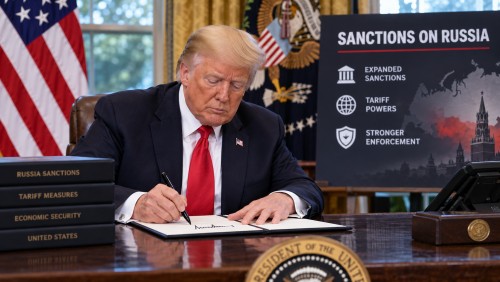
The recent signing of a new sanctions law by U.S. President Donald Trump could significantly impact global energy markets, specifically targeting nations reliant on Russian energy exports. This legislation enables the U.S. president to impose tariffs of up to 100% on countries that persist in purchasing Russian oil and gas, a move that could affect major importers like India and China depending on the law’s application.
Passed with bipartisan support in the House of Representatives, the law was signed by Trump on September 18. It expands existing sanctions on Russia and Iran, aiming to further isolate Russia’s financial networks and officials linked to its military activities. By extending the reach of U.S. sanctions, the administration seeks to weaken Russia’s ability to finance its operations through oil and gas revenue.
The new law grants the president broad discretion to determine which countries may face tariffs, with the option to waive sanctions if deemed necessary. This flexibility suggests that the administration could tailor its approach based on diplomatic or economic considerations, potentially influencing international relations with some of Russia’s energy customers.
In addition to targeting Russian energy exports, the legislation strengthens sanctions on Iranian entities, continuing efforts to curb their economic activities. The White House has emphasized the law’s role in bolstering U.S. sanctions and tariff authorities, reinforcing its commitment to countering Russian aggression and limiting Iran’s economic capabilities.
As the world watches how the U.S. administration chooses to implement these powerful new tools, countries dependent on Russian energy may need to reconsider their purchasing strategies. The potential for hefty tariffs looms large, serving as a reminder of the intricate interplay between global politics and energy markets.