
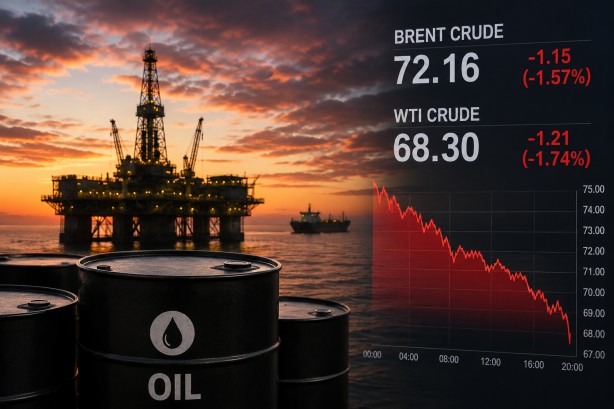
Oil prices saw a slight decline on Thursday as investors took profits and evaluated the implications of renewed tensions between the United States and Iran. Brent crude dropped by 0.52% to reach $84.51 per barrel, while US West Texas Intermediate crude decreased by 0.29% to $79.37 per barrel. Despite these drops, both benchmarks hovered near one-month highs after initially continuing their upward trend.
The market has been heavily influenced by fears of potential supply disruptions following a fresh series of US military strikes on Iranian targets and subsequent threats from Tehran to limit regional energy exports. This has put a spotlight on the Strait of Hormuz, a vital passage for a substantial portion of the world’s oil and liquefied natural gas trade, as traders closely monitor any changes in shipping activities. Reports suggest a decrease in shipping traffic through the Strait following the recent escalation.
Geopolitical tensions are playing a significant role in maintaining elevated oil prices, with market participants keeping a close eye on whether these conflicts will result in notable disruptions to energy supplies. Analysts have pointed out that while these tensions support current price levels, further developments could either push prices higher or lead to a decline, depending on the situation’s escalation or de-escalation.
Additionally, there are growing concerns about the security of the Bab el-Mandeb Strait, another critical route for energy transportation. These concerns stem from fears that regional allies might get drawn into the conflict, potentially impacting the flow of energy resources through this channel.
Some market analysts caution that oil prices could experience further increases if the tensions persist and continue to affect exports. On the flip side, a reduction in hostilities may offer relief to the market, potentially resulting in lower prices later in the year. As the situation unfolds, investors remain vigilant, assessing the potential impacts on global energy supplies.